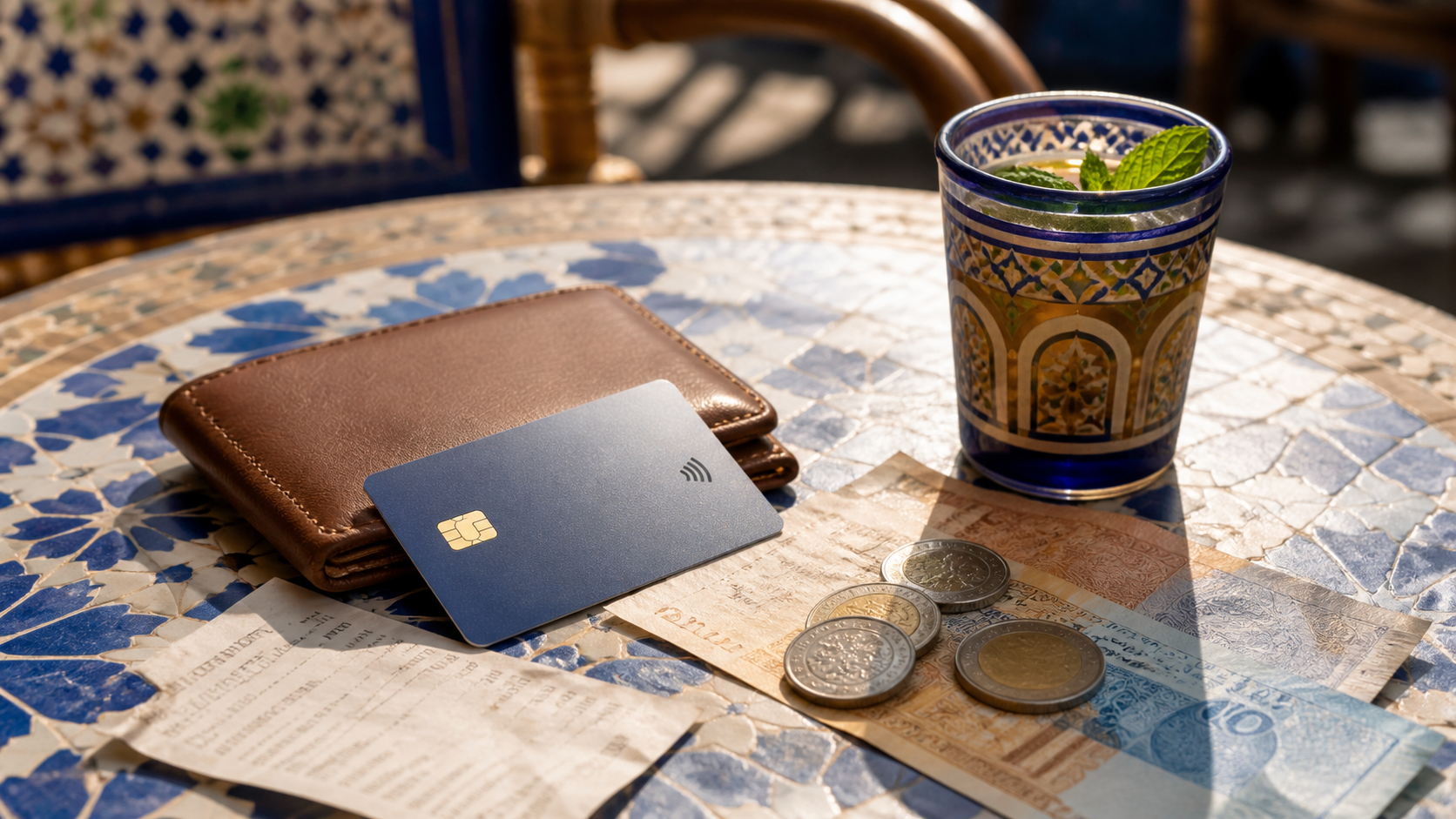
Choose a mix of cash and cards
Card acceptance can differ by merchant, town, and purchase size, so a mixed payment plan is usually the most resilient one. Use a card where the terms are clear, carry a reasonable amount of cash for smaller payments, and keep another payment method separate from your everyday wallet.
Before travelling, check whether your card has a foreign-transaction fee, a cash-withdrawal fee, daily limits, or a requirement to enable international use. These terms matter more than a card's headline rewards when you are making purchases in another currency.
Use ATMs with a total-cost mindset
An ATM withdrawal can include more than one cost: the machine operator's fee, a fee from your own card issuer, a currency-conversion markup, or a cash-advance charge. Read the screen before confirming, and compare the full debit to a current currency benchmark after the transaction posts.
Make withdrawals that fit your plan rather than repeatedly taking very small amounts. Keep the receipt until you have reviewed the account transaction, and use a machine in a location where you feel comfortable. If an ATM looks damaged or asks for unusual information, do not use it.
Know what a conversion offer means
A card terminal or ATM may offer to show and charge your home currency instead of MAD. This is often called dynamic currency conversion. It can make the amount feel familiar, but it can also include a rate or markup chosen by the terminal operator.
When you have a choice, compare the displayed rate and every charge with the alternative of paying in dirhams through your own card provider. A familiar home-currency total is not proof that it is the cheaper option. Keep the transaction screen or receipt if the choice is not clear.
Paying in MAD keeps the local price visible. Decide on any conversion only after you understand whose rate and fee will apply.
Handle cash, tips, and shared expenses clearly
Set aside smaller notes and coins for cash purchases or gratuities instead of breaking your largest note at an inconvenient time. Tipping practices depend on the situation and the service, so treat tips as a flexible line in your budget rather than assuming a fixed percentage applies everywhere.
For a group trip, record shared expenses in MAD at the time of payment. If one person used a card, note the amount that appears on the receipt and settle the local-currency share first. You can then convert each person's share using the agreed card rate or a neutral benchmark.
Keep the trip secure and easy to reconcile
Turn on transaction notifications where available and review purchases regularly. Do not share a PIN, password, or one-time code with anyone. If a card is lost, use the issuer's official app or support number—never a contact detail supplied in an unexpected message.
At the end of each day, compare larger receipts, cash used, and pending card transactions with your budget. A pending amount may change when it settles, so wait for the final posted amount before deciding what a conversion truly cost.
Match your payment plan to the trip you booked
A city break, a road trip, and a multi-day guided itinerary can place different demands on your money plan. Ask in advance what is included, what is paid locally, which currency is accepted, and whether a deposit or balance has a payment deadline.
Use the answers to plan the right cash reserve and avoid rushing into an unfamiliar conversion. A detailed itinerary can also help you identify when you are likely to need cards, cash, or a little extra flexibility.
Frequently asked questions
Is it better to pay by card or cash in Morocco?
Use both. Cards can be convenient where they are accepted and their fees are favourable, while cash is useful for smaller purchases and situations where card payments are not practical.
What should I do if an ATM offers to charge me in my home currency?
Review the offered rate and fee before accepting. Compare it with paying in MAD through your own card provider; the home-currency option can include an added conversion markup.
How can I track what I actually spent in Morocco?
Record the MAD amount and save the receipt for larger payments. For card transactions, compare the final posted home-currency debit with a current benchmark, including any stated fees.
Sources and methodology
This educational article uses unit standards and market context from the following primary or specialist sources. Worked prices are hypothetical unless explicitly identified as live data.
Plan your trip
Travel-planning resources relevant to the itinerary and payment considerations in this guide.